
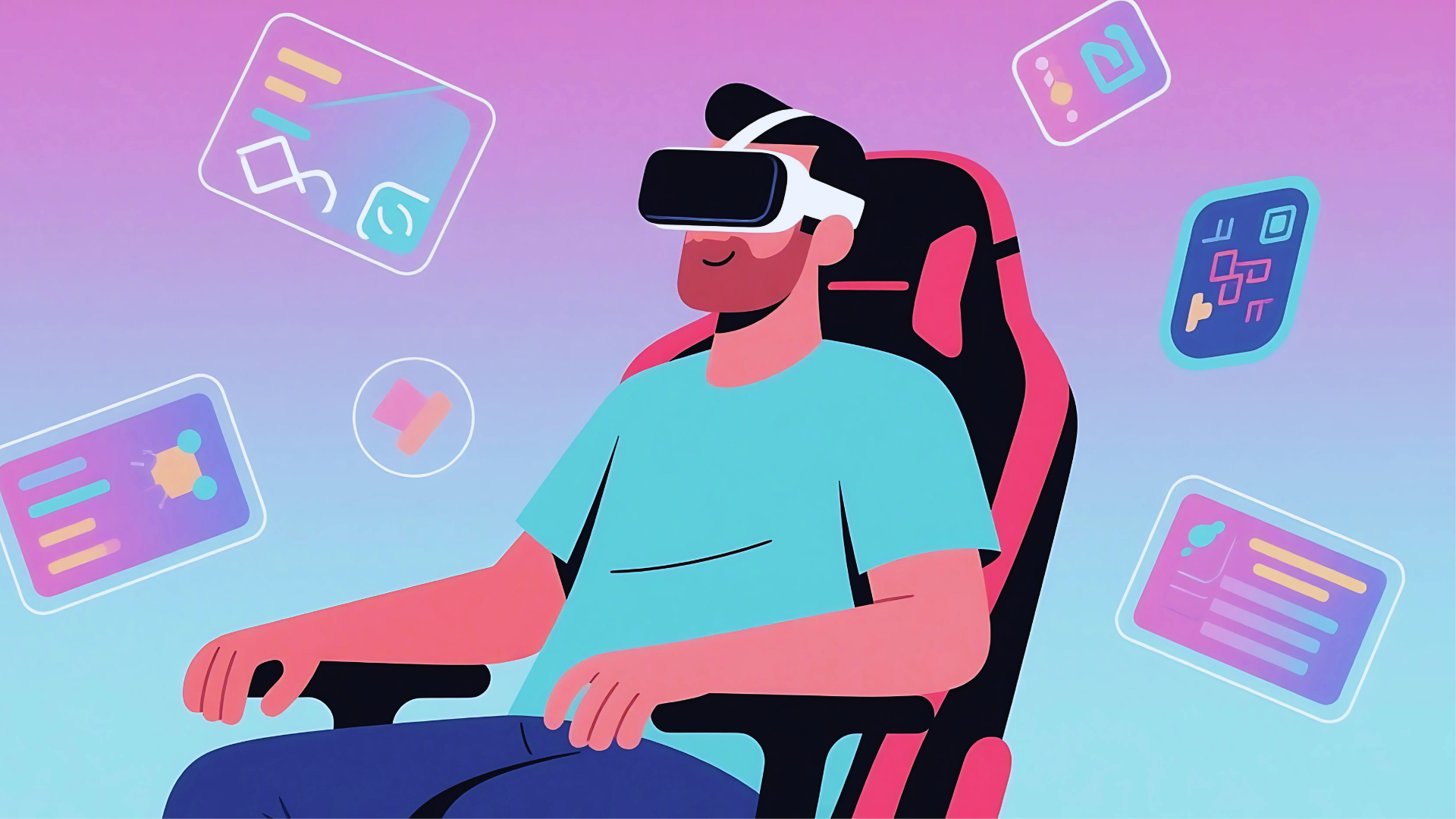
You step into digital places that blend the physical and virtual, where people, objects, and data interact in real time across shared spaces. The metaverse is a network of persistent virtual environments and interoperable digital assets that work through connected platforms, real‑time 3D rendering, cloud computing, and decentralised identity and ownership systems.
They will explore how avatars, spatial computing, blockchain, and social economies link to create those environments, and what technologies enable presence, interoperability, and secure transactions. This article guides them through the building blocks and practical examples so they can see how the metaverse could affect work, entertainment, and everyday online life.
What is the Metaverse and How Does It Work?
The metaverse combines persistent 3D virtual spaces, real-time interactions, and digital ownership to create shared online environments. It relies on hardware, networking, software platforms, and economic systems to let people meet, work, play, learn, and trade in immersive or mixed-reality forms.
Definition and Origins of the Metaverse
The metaverse describes interconnected virtual worlds where users interact through avatars, persistent environments, and shared content. Neal Stephenson coined the term in Snow Crash (1992); the idea evolved through virtual worlds like Second Life and MMOs, then accelerated with investments from companies such as Meta (Facebook rebrand), Microsoft, Epic Games, and platform creators like Roblox.
Key attributes include persistence (worlds continue when users log off), real-time interactions (sub-second networking), and user-generated content (3D models, scripts, and economy items). The concept also covers spatial computing—systems that map digital content onto physical space—and extends from fully immersive VR to AR overlays on the real world.
Core Technologies: Virtual Reality (VR), Augmented Reality (AR), and Mixed Reality
VR provides fully immersive experiences through headsets (Meta Quest, PlayStation VR, HTC Vive) and inside-out tracking for room-scale interaction. VR requires low-latency graphics, 3D engines (Unreal Engine, Unity), and increasingly, cloud rendering to stream high-fidelity scenes to lightweight headsets.
AR and MR overlay digital objects onto physical surroundings using cameras and sensors. AR glasses (HoloLens, Magic Leap prototypes, rumoured Apple devices) and smartphone AR use computer vision, SLAM (simultaneous localisation and mapping), and real-time occlusion. Mixed reality blends tracked physical objects with virtual items for collaborative workflows, training, and retail try-ons.
Haptic feedback, spatial audio, and improved hand/body tracking enhance presence. Edge and cloud computing, plus 5G networking, reduce latency and support multi-user scalability. AI assists scene understanding, procedural content generation, and avatar behaviour.
Avatars and Digital Identity
Avatars act as users’ representations across virtual spaces. They range from simple 2D icons to lifelike 3D models with facial expressions, lip-syncing, and full-body tracking driven by motion capture or inverse kinematics. Platforms like Meta’s Horizon Worlds and VRChat emphasise social presence, while games such as Fortnite and Roblox prioritise customizable cosmetic avatars.
Digital identity links avatars to accounts, credentials, and sometimes blockchain wallets for proof of ownership. Important factors: cross-platform identity (single sign-on or decentralised identifiers), privacy controls (who sees real name or location), and moderation tools to prevent impersonation or abuse. Lifelike avatars require AI-driven animation, photorealistic rendering, and standards for interoperability to move between virtual worlds.
Metaverse Platforms and Key Examples
Platforms vary by centralisation, use case, and technology stack. Centralised examples: Meta’s Horizon Worlds and Horizon Workrooms (virtual meetings), Epic Games’ Fortnite (social events and concerts), and Roblox (user-generated games and virtual economy). Decentralised, blockchain-based worlds include Decentraland, Cryptovoxels, and Somnium Space—each sells virtual land as NFTs (LAND, parcels) and uses tokens (MANA, SAND) for transactions.
Minecraft and Second Life demonstrate long-running virtual economies and content ecosystems. Enterprise-focused platforms (Microsoft Mesh, Spatial) target remote collaboration and virtual offices. Choice of platform affects graphics fidelity, scripting capability, avatar systems, and economic models.
Digital Assets: Blockchain, NFTs, and Virtual Economies
Blockchain enables provable digital ownership via NFTs and tokenised assets. Creators mint NFTs representing art, avatars, wearables, or virtual land; buyers hold tokens in wallets (MetaMask, hardware wallets) and trade on marketplaces. Tokens (ERC-20 or equivalent) power in-world currencies and governance, with projects like Decentraland using MANA and The Sandbox using SAND.
Virtual economies mirror real-world supply and demand: limited virtual land increases scarcity and market value; creators monetise items and services. Challenges include gas fees, fraud, price volatility, and regulatory questions about securities or taxation. Blockchain integration supports cross-platform ownership but requires standards for interoperability and user-friendly custody.
How to Access and Experience the Metaverse
Users access the metaverse through multiple entry points: VR headsets for full immersion, AR-capable phones or tablets for overlays, desktop and browser for 3D worlds, and game consoles. Hardware choice affects latency, field of view, and input methods (controllers, hand tracking, eye tracking).
Software steps: create an account, customise an avatar, and join a world or server. Payment requires linked accounts or crypto wallets for purchases. Enterprises deploy virtual offices via apps like Horizon Workrooms or Microsoft Mesh, integrated with collaboration suites. Developers use SDKs (Unity, Unreal) and cloud services for multiplayer networking and persistent storage.
Accessibility factors: affordable headsets, broadband or 5G coverage, and simplified onboarding for wallets and identity. The digital divide and device fragmentation remain barriers to broad adoption.
Decentralisation, Interoperability, and Future Possibilities
Decentralisation aims to distribute ownership and governance across users rather than single corporations. Web3 proponents emphasise decentralised identifiers (DIDs), open protocols, and token-based governance to avoid vendor lock-in and enable cross-world asset portability.
Interoperability requires shared standards for avatar formats (glTF, USDZ), asset metadata, authentication (OAuth, blockchain wallets), and economic primitives. Technical hurdles include differing rendering engines, physics models, and moderation policies.
Future directions: improved AI for NPCs and content generation, affordable AR glasses, and legal frameworks for digital property and data privacy. Cross-industry collaboration among Apple, Google, Microsoft, Epic, and standards bodies will shape whether virtual spaces become fragmented entertainment silos or an interconnected metaverse with seamless identity and asset flows.